iQ Chandos House
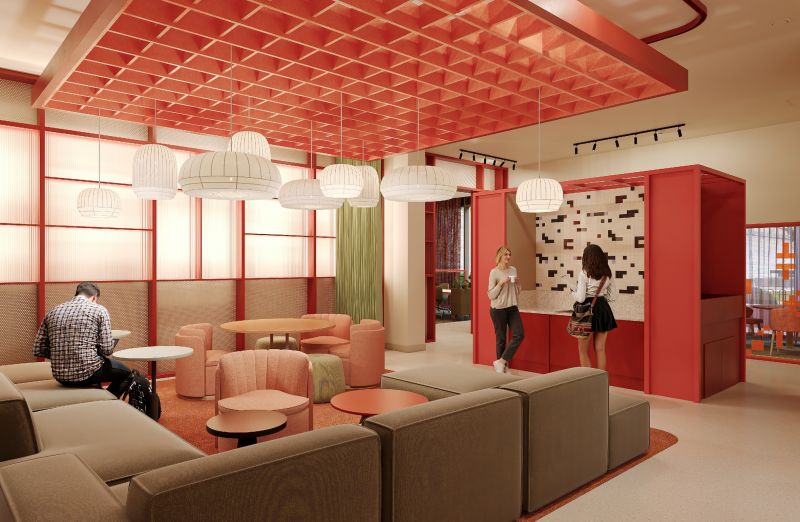
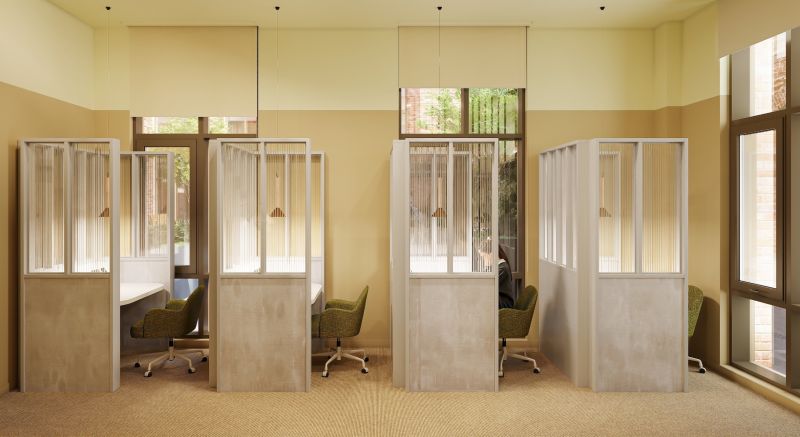
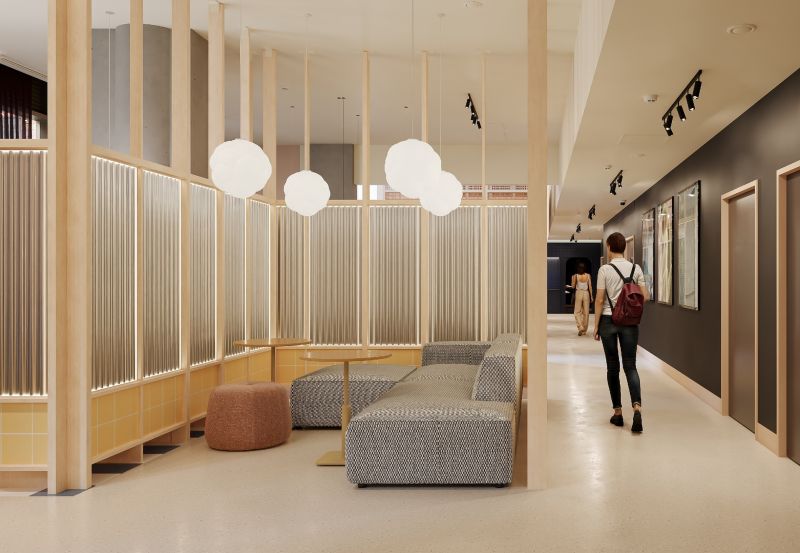
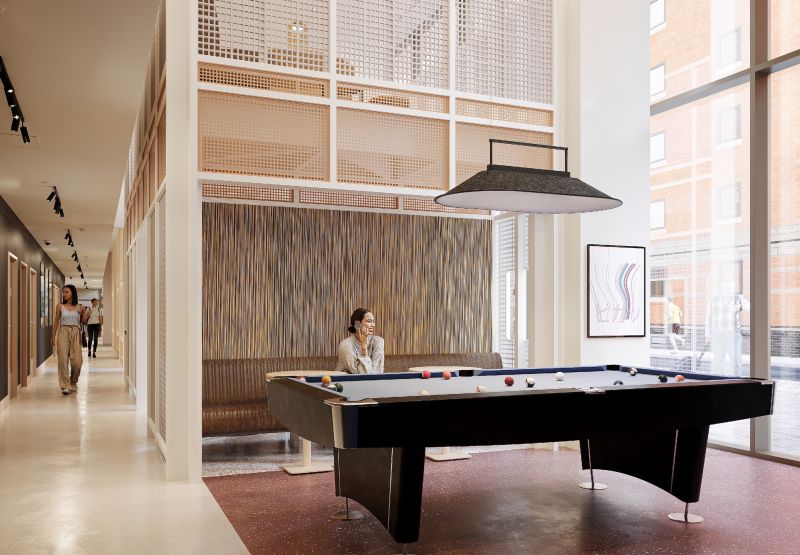
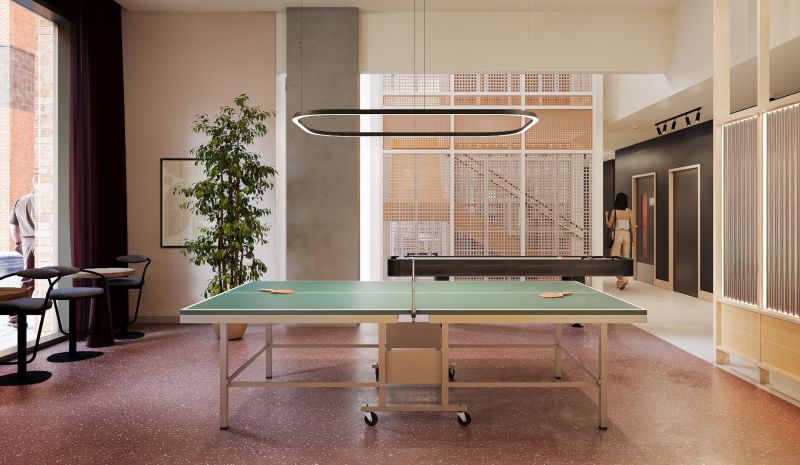
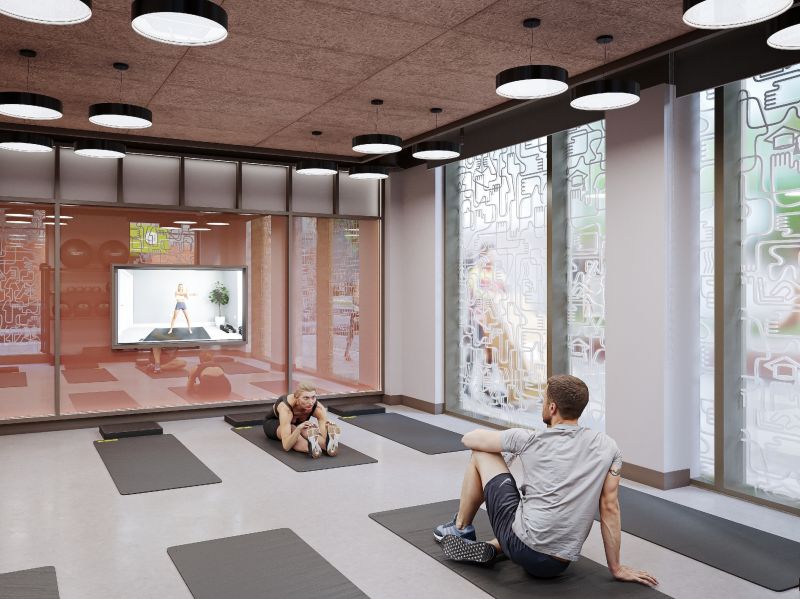
The student amenity spaces at Chandos House in Manchester include extensive study, social, wellness, dining and entertainment facilities with a focus on catering for the needs of a diverse student population and responding to the demands of the contemporary educational landscape. Our design shifts between intimate protected spaces and habitable structures which make the most of double-height spaces.
The majority of the amenity spaces are on the ground floor, with generous views of the surrounding city and a plan that centres on two tall volumes. To protect the relationship with the surroundings while still offering genuine variety and defensible space, we sited the prime dwell spots beside natural daylight, and clustered the darker rooms together.
A double-decker diner occupies one of the tall spaces, creating space for casual dining and table games below and unrivalled people-watching above, allowing students to individually retreat and observe or gather together in groups.

We were inspired by the rich tradition of brutalist public art in the neighbourhood, as well as two instances of pioneering Mancunian ingenuity which find a common language in the image of patterned punchcards; Jacquard weaving looms which enabled accessible patterned textiles, and the ‘Manchester Baby’ (Small Scale Experimental Machine), the first computer to run a stored programme, and the precursor to modern computing.
The interiors feel fresh, energetic and welcoming and express an idea of futurism that’s anchored in the optimism of the early days of computers. Our goal was to create amenity spaces which impress with their ambition and scale but still feel tailored to individual students and allow for moments of intimacy.
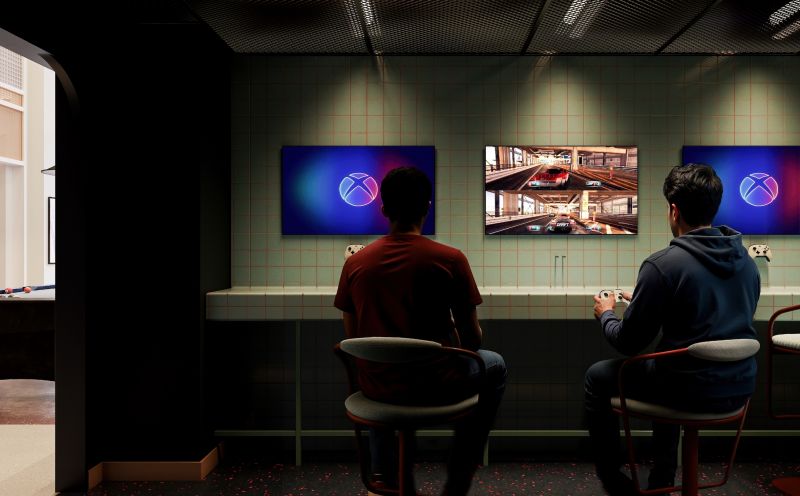
Grids and circular cutouts are a repeated motif, referencing early computer labs. Playful details in bolder colours are localised to high-energy areas such as mahjong dens, cinema spaces and retro arcades as landmarks within an overall palette which is creamy and warm and shot through with natural textures. Playful references to brutalist artwork find expression in cast cement sculptural walls and architectural planters which provide privacy to students within study rooms.